eSIM vs Local SIM for International Travel: Which Should You Get?
Introduction
Staying connected abroad used to mean hunting for a SIM card on arrival. Now eSIMs let you set up data before you even land. Both options still compete for travelers.
The choice affects cost, convenience, and coverage. An eSIM is instant and digital, while a local SIM is physical and often cheaper. Neither is best for every trip.
This guide compares eSIMs and local SIMs for international travel. We will look at setup, price, coverage, and compatibility. The aim is a practical, money-aware decision.
By the end, you will know which option fits your trip. You will also know what to check before you go. Your phone and trip length matter most.
Quick Answer
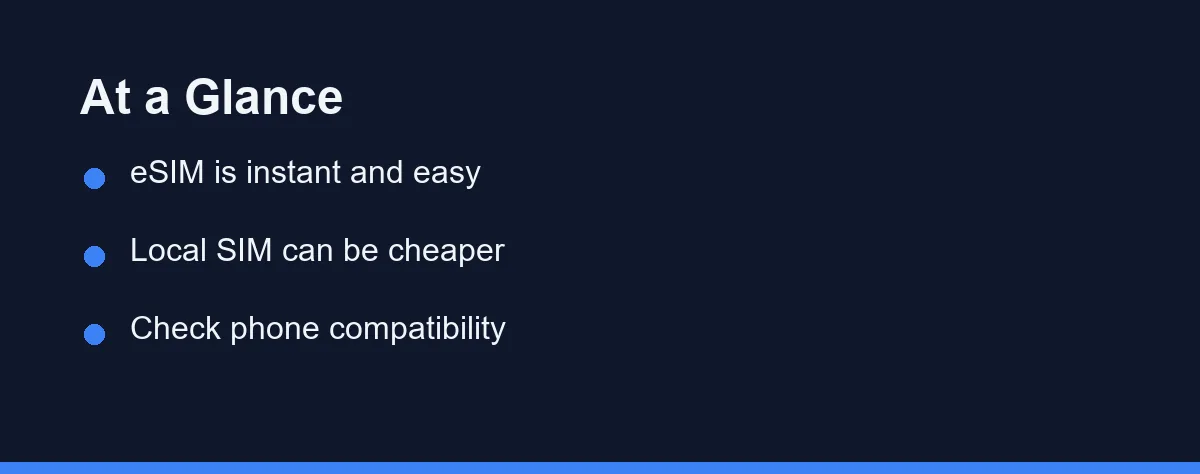
Choose an eSIM for convenience and instant setup. You buy and activate it online before departure, then land already connected. For short trips, this ease is hard to beat.
Choose a local SIM for the cheapest data on longer stays. Local carriers often offer generous plans at low prices. Heavy data users can save meaningfully.
Neither option is universally better. eSIMs win on convenience, while local SIMs win on cost for heavy use. Your trip length and phone decide.
What to Look For
Start with phone compatibility. Not every phone supports eSIM, and some are carrier-locked. Confirm both before relying on an eSIM abroad.
Trip length shapes the value next. Short trips favor the instant setup of an eSIM. Long stays may justify the effort of a local SIM.
Data needs matter for cost. Light users benefit from simple eSIM bundles, while heavy users may prefer local rates. Estimate your usage honestly.
Coverage and reliability round out the picture. Check which networks each option uses at your destination. For eSIM plans and coverage, providers like Airalo publish country details.
Top Options
Connectivity abroad generally falls into a few approaches. Each suits a different traveler. Use them as a framework, not a rule.
Travel eSIM
A travel eSIM is the convenience choice. You install it before your trip and activate on arrival. There is no store visit and no physical card to lose.
The trade-off is cost for heavy users. Bundled data can cost more per gigabyte than local plans. For light, short trips, that premium is small.
Local SIM Card
A local SIM often delivers the best local rates. You buy it at the airport or a shop and swap it in. Heavy data users and long stays benefit most.
The catch is effort and setup. You must find a vendor, sometimes show ID, and swap cards. It also occupies your single physical SIM slot.
Roaming From Home
Some travelers simply use their home carrier’s roaming. It requires zero setup and keeps your number active. The downside is often high cost.
Roaming suits very short trips or occasional use. For anything longer, an eSIM or local SIM usually saves money. Check your carrier’s roaming rates first.
Feature Comparison

The table below summarizes how the options compare for international travel. Use it as a quick reference, not a strict verdict. Confirm details with each provider.
| Factor | Travel eSIM | Local SIM | Home Roaming |
|---|---|---|---|
| Setup | Instant, online | In-person | None |
| Cost for heavy data | Medium | Low | High |
| Convenience | High | Medium | Highest |
| Phone requirement | eSIM support | SIM slot | Any |
| Best for | Short trips | Long stays | Very short trips |
The comparison highlights the trade-offs. eSIMs balance convenience and cost, local SIMs win on price, and roaming wins on simplicity. Each fits a different trip.
For most short international trips, an eSIM offers the best balance. For long stays with heavy data, a local SIM tends to save the most.
How to Choose

Begin by confirming your phone supports eSIM. Check the model and unlock status before assuming. This single step rules out one option or the other.
Next, estimate your data needs for the trip. Light browsing suits an eSIM bundle, while heavy streaming favors local rates. A rough estimate guides the choice.
Then weigh convenience against cost. If you value landing already connected, an eSIM is worth a small premium. If you want the lowest price, a local SIM wins.
Finally, compare current rates before you travel. Prices and plans change often by country. A quick check prevents overpaying abroad.
Pricing: What to Expect
Connectivity pricing varies by country, provider, and data amount. Travel eSIMs sell bundles by region and gigabyte. Always confirm current prices on the provider’s official site.
Local SIMs often offer the lowest cost per gigabyte. Their value grows on longer trips with heavy usage. The savings can be significant for data-hungry travelers.
eSIM bundles cost a bit more but skip the hassle. For short trips, the convenience easily justifies the difference. You avoid airport queues and card swaps.
Roaming from home is usually the priciest option. It suits only very short trips or emergencies. Check your carrier’s rates before defaulting to it.
Common Mistakes to Avoid
Travelers make a few predictable errors with mobile data abroad. Avoiding them saves money and prevents arrival-day stress.
Do not assume your phone supports eSIM. Some models and locked devices do not. Confirm compatibility before buying a travel eSIM.
Do not leave data roaming on by accident. A forgotten setting can trigger huge home-carrier charges. Disable roaming once your eSIM or local SIM is active.
Do not buy more data than you need. Short trips rarely require large bundles. Estimate your usage and pick a plan that fits.
Do not wait until arrival to set up an eSIM. Installing it beforehand means you land connected. Airport wifi can be unreliable for activation.
Do not overlook coverage maps. Not every plan covers every region well. Check the provider’s network details for your destination first.
Packing smart helps here too, since a light bag frees you to move fast. See our guide to carry-on vs checked luggage for budget trips.
Conclusion
eSIMs and local SIMs both keep you connected abroad in 2026. eSIMs win on convenience, while local SIMs win on cost for heavy use. Neither is universally best.
Choose an eSIM for short trips and instant, hassle-free setup. Choose a local SIM for long stays and the cheapest heavy data. Let your trip decide.
Whichever you pick, confirm phone compatibility before you travel. An unsupported phone rules out an eSIM entirely. That check saves frustration on arrival.
Finally, compare current plans close to your trip. Rates and coverage shift by destination and season. A little research keeps you connected for less.
It also helps to keep a backup option in mind. Saving an offline map and a hotel address protects you if data fails on arrival. A small amount of preparation prevents a stressful, disconnected start to any trip.
FAQ
What is the difference between an eSIM and a local SIM?
An eSIM is a digital SIM you activate online, while a local SIM is a physical card bought at your destination. eSIMs are convenient and instant, while local SIMs can be cheaper for heavy data use. The best pick depends on your phone and trip.
Does my phone support eSIM?
Most recent phones support eSIM, but not all, and some regions lock devices. Check that your phone is eSIM-compatible and carrier-unlocked before relying on one. The manufacturer site lists supported models.
When is an eSIM better than a local SIM?
eSIMs are ideal for short trips and travelers who want instant setup on arrival. Local SIMs suit longer stays or heavy data needs where local rates are cheaper. Match the choice to your trip length.
Some links may be affiliate links. We may earn a commission at no extra cost to you.
This article was written with AI assistance. It is researched and fact-checked, not based on personal hands-on testing unless explicitly stated.
댓글
댓글 쓰기